Noah Foster · 19 September 2026
Prism Miniaturization Advances Portable Health Diagnostics
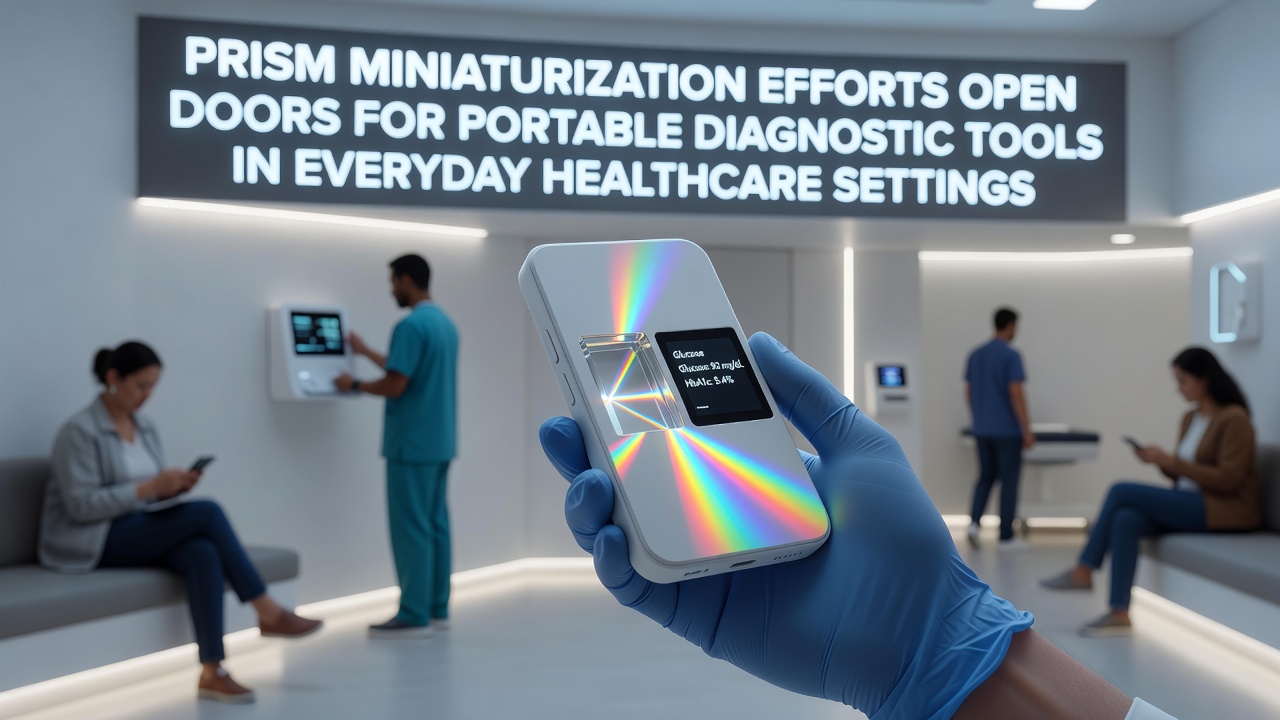
Prism miniaturization has emerged as a key development in optics research, allowing engineers to shrink traditional prism structures while preserving their light-bending capabilities, and this progress directly supports the creation of compact diagnostic instruments that clinicians can deploy outside hospital laboratories. Researchers at multiple institutions have refined fabrication techniques such as precision etching and thin-film deposition, which reduce prism volumes without sacrificing spectral accuracy or resolution in medical imaging applications.
Technical Foundations of Reduced-Scale Prisms
Traditional prisms rely on bulk glass or crystal materials to disperse light into component wavelengths, yet recent material science advances have produced micro-prisms measuring just a few millimeters across, and these smaller units integrate into microfluidic channels or sensor arrays that fit inside handheld analyzers. Data from optics laboratories indicate that the new designs maintain dispersion angles comparable to larger predecessors, which enables accurate measurement of biomarkers such as hemoglobin oxygenation or glucose concentration in blood samples processed on-site.
Engineers achieve size reduction through layered polymer coatings and silicon-based substrates, while alignment tolerances remain within sub-micron ranges thanks to automated lithography systems, and these methods cut overall device footprints by more than half compared with earlier portable spectrometers.
Integration into Everyday Clinical Workflows
Portable diagnostic tools built around miniaturized prisms now support rapid testing in primary care offices, community pharmacies, and even remote outreach programs, where larger benchtop equipment would prove impractical. In September 2026 several pilot programs demonstrated that prism-equipped devices delivered results for routine blood panels within five minutes, matching laboratory standards in controlled trials conducted across multiple regions.
Healthcare providers use the compact units to monitor chronic conditions such as diabetes and cardiovascular markers during regular patient visits, and the reduced need for sample transport lowers turnaround times while decreasing logistical costs associated with centralized testing facilities. Observers note that integration with smartphone interfaces further simplifies data capture and sharing between practitioners and patients.
Supporting Evidence from Research Initiatives
Studies published in peer-reviewed journals have quantified performance gains, showing that miniaturized prism modules achieve wavelength resolution below 2 nanometers in field conditions, and similar figures appear in reports from government health agencies including those tracking medical device approvals. One collaborative project involving Canadian research centers and European academic partners documented successful deployment of prism-based oximeters in rural clinics, where the devices maintained calibration stability over six-month periods without external recalibration.
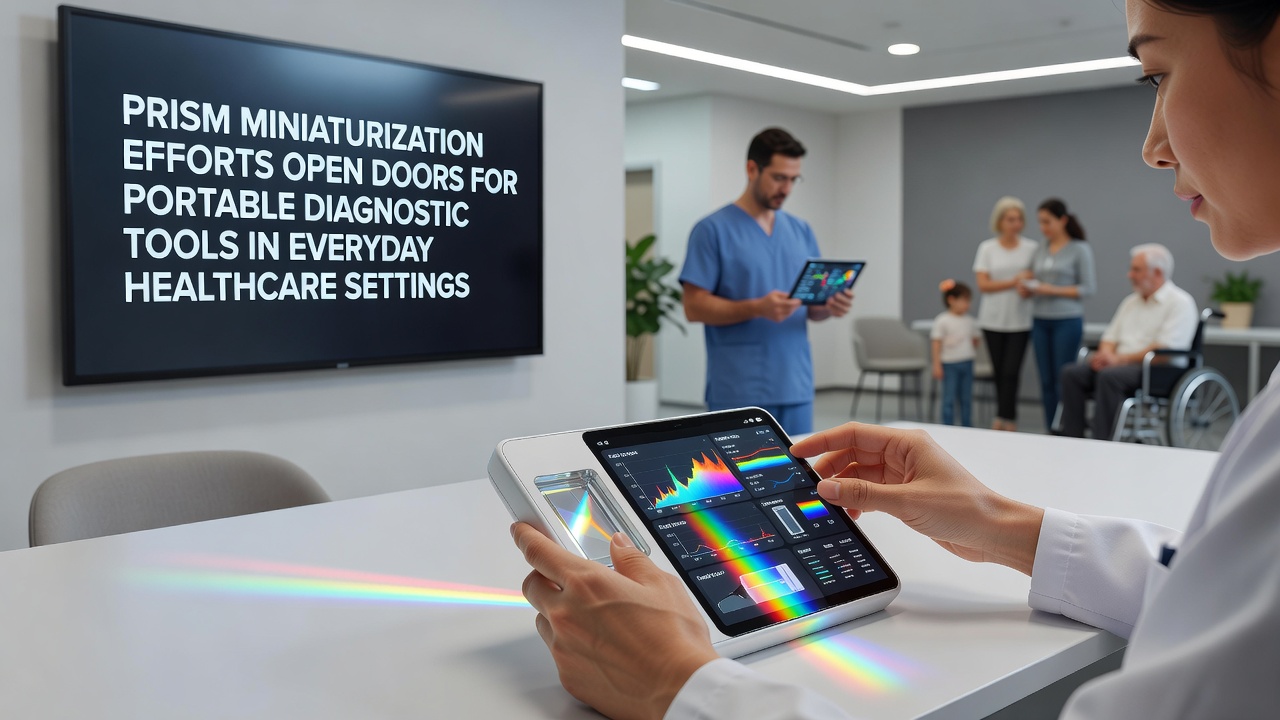
Additional validation comes from industry reports that track adoption rates, with projections indicating continued growth in point-of-care markets through the remainder of the decade, and regulatory bodies such as the U.S. Food and Drug Administration have cleared several prism-enabled analyzers for over-the-counter distribution following safety and efficacy reviews.
Current Landscape and Ongoing Refinements
Manufacturers continue to explore hybrid prism-sensor combinations that incorporate fluorescence detection and near-infrared spectroscopy, expanding the range of detectable analytes without increasing device size, and these iterations address limitations previously encountered in low-light environments. Teams at universities in Australia and the United States have tested prototypes that combine miniaturized optics with wireless connectivity, allowing real-time upload of diagnostic readings to electronic health records while complying with data protection standards.
Supply chain improvements in specialty glass and polymer materials have also contributed to cost reductions, making the technology accessible to smaller clinics and home-care providers, whereas earlier versions remained limited to well-funded research hospitals.
Conclusion
Prism miniaturization continues to reshape how diagnostic capabilities reach patients outside traditional laboratory settings, with documented advances in resolution, portability, and integration supporting broader clinical adoption. Ongoing work at research institutions worldwide focuses on further size reductions and expanded analyte panels, building on the foundation established through systematic engineering refinements and regulatory clearances achieved to date.