Noah Foster · 31 October 2026
Prism Geometry Modifications Advancing Yield Forecast Reliability in Vertical Farming Operations
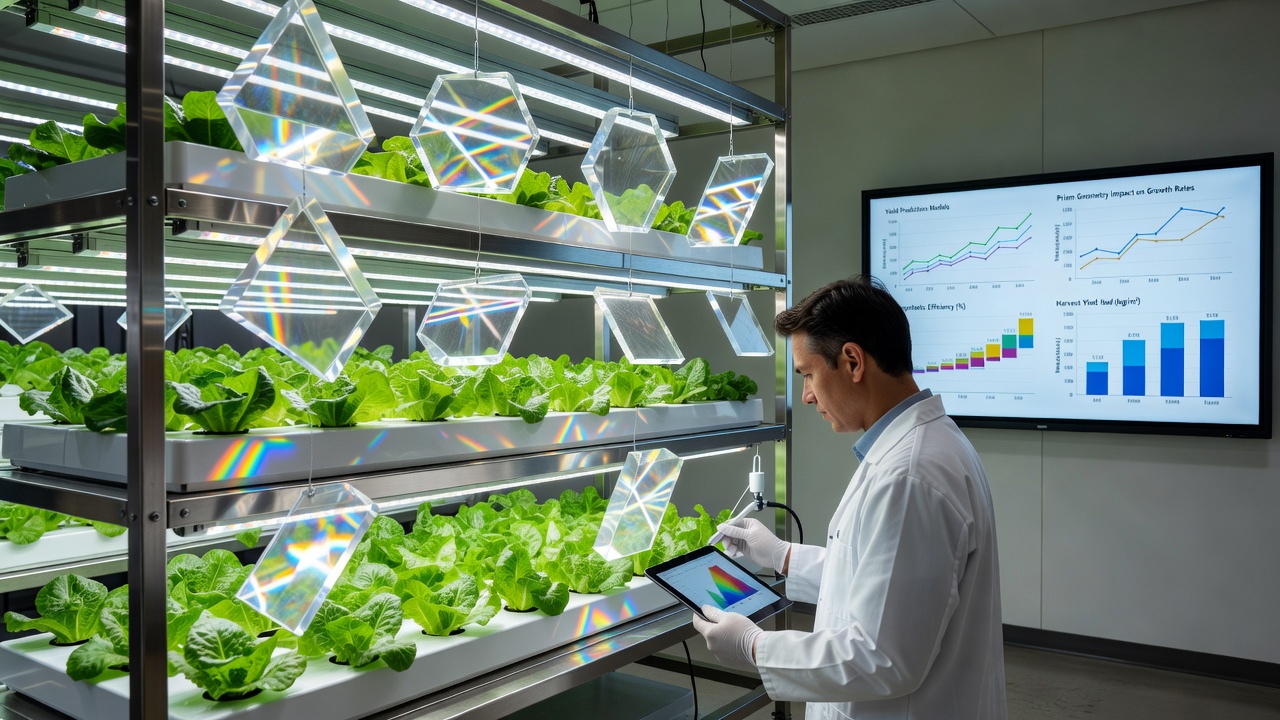
Researchers have documented how small adjustments to prism angles and facet configurations allow more accurate capture of light wavelengths that influence plant growth cycles in multi-tiered indoor facilities, and these changes feed directly into predictive algorithms that estimate harvest volumes weeks or months ahead of time. Vertical farming operations rely on controlled lighting environments where even minor shifts in spectral distribution can alter biomass accumulation rates, so teams adjust prism geometries to direct and split incoming beams with greater consistency across sensor arrays mounted above crop beds.
Core Principles Behind Prism Adjustments in Controlled Environments
Prism designs traditionally split white light into component colors, yet in agricultural settings the focus shifts toward isolating specific bands in the photosynthetically active radiation range while minimizing stray reflections that distort sensor readings. Engineers modify apex angles and introduce slight curvatures on exit faces to tighten the dispersion patterns, which reduces overlap between adjacent wavelength channels and improves the signal clarity delivered to monitoring systems. Data from installations in North America show that such tweaks have narrowed the variance in predicted versus actual leaf area indices by measurable margins, according to USDA Agricultural Research Service reports.
Operators integrate these refined prisms into overhead rigs that scan rows of lettuce, herbs, and microgreens at regular intervals, capturing reflectance data that algorithms translate into growth trajectory models. The geometry changes also help compensate for the uneven light distribution created by stacked LED arrays, since different layers receive slightly altered intensities depending on their distance from the source fixtures. Facilities in Australia have reported similar integration patterns where prism refinements align sensor outputs more closely with biomass sampling results taken at weekly checkpoints.
Integration With Predictive Modeling Systems
Yield prediction software processes the cleaned spectral datasets to forecast fresh weight at harvest, and prism geometry plays a supporting role by supplying inputs that carry lower noise levels than earlier configurations allowed. When facet angles receive incremental polishing or when base materials switch to higher refractive index compounds, the resulting beam paths become more predictable, which in turn lets machine learning models train on tighter datasets without needing extensive post-processing filters. Observers note that these optical upgrades complement existing environmental controls such as humidity regulation and nutrient dosing schedules already common in vertical setups.
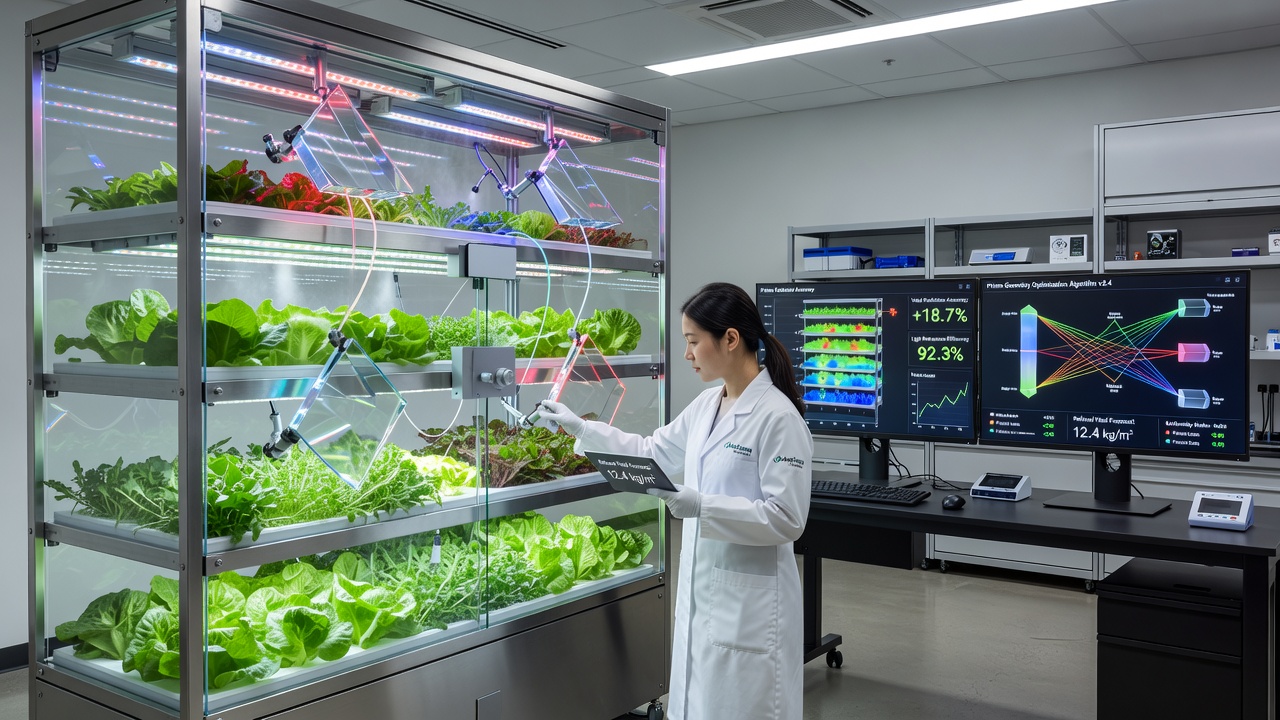
Studies conducted through Canadian research networks have tracked how prism-modified light paths affect the accuracy of chlorophyll fluorescence readings, and those readings feed into equations that project marketable yield per square meter. The approach avoids reliance on broad averages by delivering spatially resolved data across each growing plane, so operators can adjust lighting intensity on individual tiers rather than applying uniform corrections that might over- or under-compensate in some zones. Figures released in October 2026 from collaborative trials indicate measurable convergence between modeled and harvested outputs when prism parameters receive targeted calibration.
Implementation Examples Across Different Crop Types
Leafy greens respond quickly to spectral tweaks because their short growth cycles allow frequent validation against prediction outputs, whereas fruiting crops like strawberries require longer monitoring windows that benefit even more from stable prism performance over extended periods. One installation in the Netherlands adjusted prism apex angles by fractions of a degree to better isolate far-red wavelengths known to influence flowering initiation, and subsequent harvest records aligned more closely with software projections than previous seasons had shown. Technicians achieve these refinements through iterative testing that combines ray-tracing simulations with on-site measurements taken under actual LED spectra.
Equipment suppliers now offer modular prism mounts that permit on-site angle micro-adjustments without full disassembly, which reduces downtime during crop transitions. The same mounts accommodate different base materials depending on whether the priority is ultraviolet rejection or enhanced near-infrared transmission for root zone monitoring sensors placed beneath grow trays. European Union agricultural technology assessments have catalogued several such deployments where geometry refinements contributed to narrower confidence intervals around projected tonnage figures.
Conclusion
Continued refinement of prism geometries supports incremental gains in the reliability of yield forecasts that guide planting schedules and resource allocation inside vertical farming facilities. As sensor networks expand and crop varieties diversify, the optical precision delivered by these adjustments remains a contributing factor to the overall data quality that modeling platforms require. Ongoing work focuses on scaling the same principles to larger production footprints while maintaining the wavelength separation accuracy already demonstrated in smaller test beds.