Noah Foster · 17 October 2026
Optical Heritage in the Digital Age: Prism Innovations from History Aid Today's Researchers
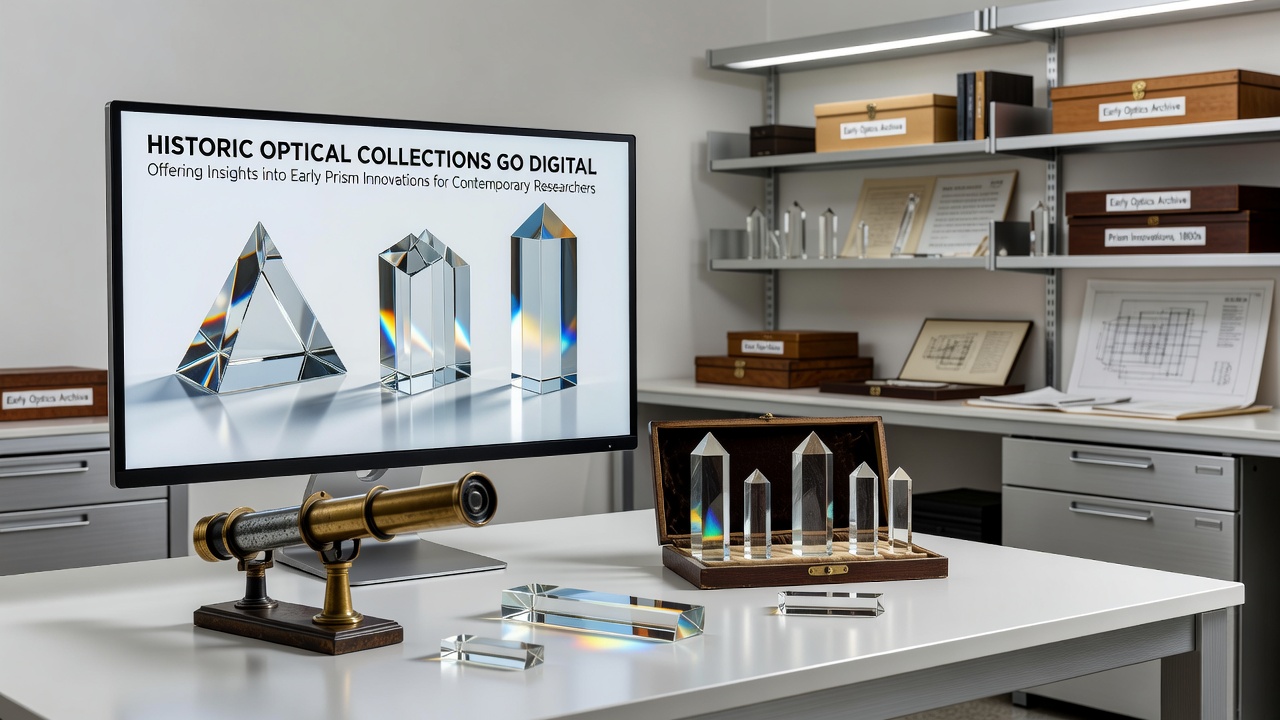
Institutions across multiple continents have accelerated efforts to digitize historic optical collections, and these projects now deliver direct access to early prism designs that shaped foundational experiments in light refraction and dispersion. Researchers gain searchable records of instruments crafted between the late 1700s and early 1900s, while metadata layers connect each artifact to laboratory notebooks, patent drawings, and correspondence that reveal manufacturing techniques of the period.
Data from the October 2026 release phase shows more than 4,200 individual prism records uploaded to open repositories, and these entries include high-resolution imagery plus three-dimensional models that allow virtual rotation and measurement. Universities in North America and Europe report increased citation rates for papers that reference these digitized holdings, because scholars can now compare physical properties without travel or handling restrictions.
Archival Partnerships Drive the Conversion Process
National libraries, university optics departments, and specialized museums formed consortia that standardized scanning protocols for fragile glass and crystal components. Teams employ multispectral imaging to capture surface coatings and internal flaws that remain invisible under normal light, then they embed the resulting files with calibration data drawn from contemporary metrology standards. The approach preserves original measurements while adding layers that modern software can query for refractive index values or angular tolerances.
One collaborative project coordinated by the Library of Congress integrated records from private estates that had remained closed for decades. Curators cross-referenced auction catalogs with surviving instrument makers' ledgers, and the combined dataset now traces supply chains for crown glass and flint blanks used in 19th-century prism fabrication. Similar initiatives in Australia and Canada have contributed regional examples that illustrate how local mineral sources influenced prism geometry choices.
Early Designs Reveal Unexpected Engineering Choices
Analysis of the digitized portfolios shows that several prism makers experimented with compound angles and hybrid materials long before textbooks formalized the constant-deviation prism. Entries from an 1847 workshop notebook describe a prototype that combined quartz and crown glass sections to reduce chromatic aberration, and the accompanying sketches match surviving artifacts now viewable in the online collection. Researchers note that these early attempts predate similar configurations patented decades later, which suggests parallel development paths across workshops that operated without formal communication.
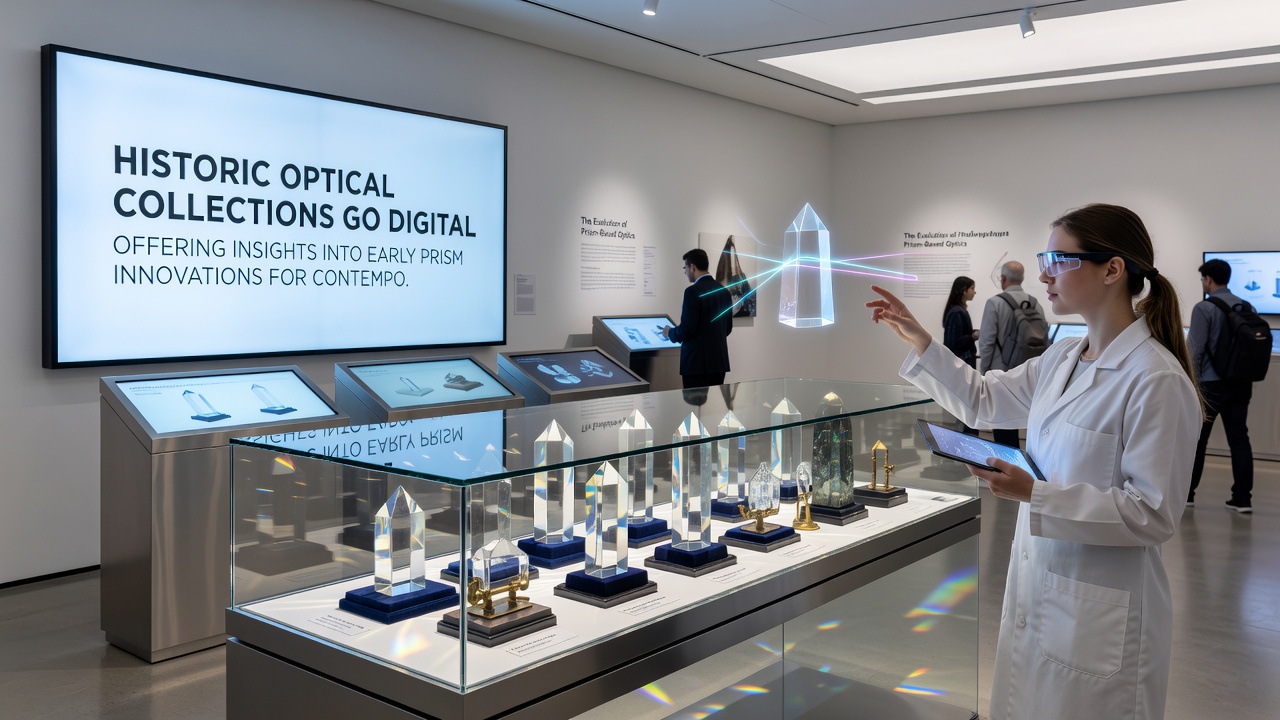
Metadata tags also flag instances where makers adjusted apex angles to compensate for glass batch variations, and these adjustments appear in multiple collections separated by geography. Observers note that such empirical tuning methods parallel current adaptive optics practices, although the historical versions relied on hand polishing and iterative testing rather than computer modeling.
Access Tools Support Contemporary Applications
Search interfaces allow filtering by material composition, manufacturing decade, and measured deviation angles, while export functions generate files compatible with ray-tracing programs used in present-day lens design. Graduate programs have incorporated the archives into coursework that tasks students with replicating historic setups using modern 3D-printed mounts, and preliminary reports indicate that students recover performance metrics close to those recorded in the original notebooks.
European research centers have begun feeding selected prism models into machine-learning pipelines that predict how slight changes in surface figure affect beam steering accuracy. The training sets draw directly from the digitized measurements, which removes the need to source rare physical specimens for each trial. A parallel effort at a Canadian technical institute links the same records to climate-controlled storage guidelines, helping conservators prioritize which artifacts require immediate stabilization before further handling.
Conclusion
Digitization of historic optical collections continues to expand the range of primary sources available for prism research, and the October 2026 data releases mark a measurable increase in both record volume and analytical tooling. Contemporary investigators now consult these archives to benchmark new fabrication methods against documented precedents, while conservators gain precise digital surrogates that reduce physical wear on the originals. The combined effect keeps early prism innovations accessible for ongoing study without geographic or institutional barriers.